Grossglockner High Alpine Road
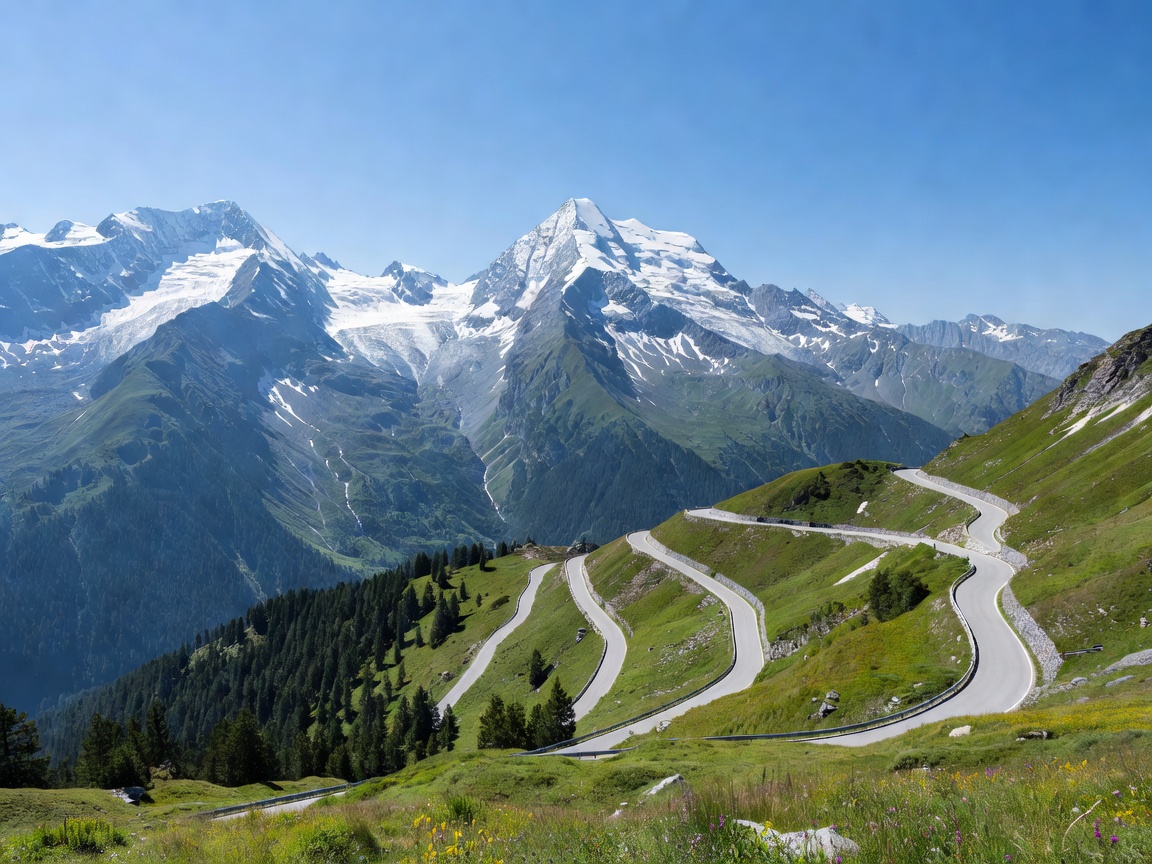
A flawless ribbon of Austrian engineering overshadowed by towering glaciers.
Geographic Overview and Scale
The Grossglockner High Alpine Road (Großglockner-Hochalpenstraße) is the highest surfaced mountain pass road in Austria. It links the state of Salzburg with Carinthia, passing deep through the heart of the Hohe Tauern National Park. The road culminates at the Hochtor Pass at 2,504 meters, though a spur road leads even higher to the Edelweißspitze at 2,571 meters, offering staggering panoramic views of over thirty peaks that stretch beyond 3,000 meters in altitude.
Named after the Grossglockner—Austria’s highest peak at 3,798 meters—the road is a masterclass in integration with nature. Instead of simply conquering the landscape, the wide, sweeping contours of the tarmac seem to flow with the natural geology, offering some of the most consistently pristine alpine scenery available to drivers anywhere in the world.
The Engineering History
Conceived during the economic stagnation following the First World War, the road was a monumental public works project intended to stimulate the Austrian economy and promote tourism. Built between 1930 and 1935, it employed thousands of workers who battled severe weather, avalanches, and solid rock to lay down the route.
From the day of its opening, it was celebrated as a triumph of modern engineering and quickly became a destination for motorsport testing and endurance trials. Today, the route is meticulously maintained. Because it operates as a private toll road, the revenue generated is invested heavily back into the infrastructure, resulting in exceptionally smooth tarmac, sturdy retaining walls, and well-designed pull-out areas.
Driving Dynamics and Challenges
Where the Stelvio is defined by torturous technical hairpins, the Grossglockner is defined by flow. The road is noticeably wider than most historical alpine passes, allowing for smoother lines and less dramatic braking requirements on entry. The 36 official bends are linked by long, sweeping sections that reward vehicles with balanced chassis dynamics and strong mid-range torque.
The ascent to the Edelweißspitze is a notable exception. This brief offshoot is paved with traditional cobblestones and features gradients approaching 14%, demanding first-gear commitment and precise throttle control, especially in wet conditions where the stones become notably slick.
Altitude still plays a significant role in vehicle performance, and the sheer length of the descent into either Fusch or Heiligenblut means that brake management is critical. The high average speeds attainable on the sweeping sections can easily overheat braking systems if drivers rely on the pedal rather than engine braking to manage descent speeds.
Preparation and Toll Requirements
Access to the Grossglockner High Alpine Road is heavily regulated to ensure safety and preserve the national park environment.
- Toll Fees: The road requires an entry ticket, purchased at the toll stations in Ferleiten or Heiligenblut. Toll fees apply and vary significantly by vehicle classification (motorcycles, cars, motorhomes). Multi-day and seasonal passes are also available for enthusiasts.
- Operating Hours: The road is completely closed during the winter (typically November to early May). Even in summer, access is restricted during the night. The gates close in the evening, meaning all travelers must complete their journey within daylight hours.
- Weather Checks: Prior to arriving at the toll booths, it is imperative to check the official online webcams and status reports. Snow chains can occasionally become a sudden requirement even in mid-summer.
The Grossglockner remains the benchmark for the "grand touring" mountain experience. It delivers awe-inspiring scale combined with impeccable infrastructure, rewarding drivers who value fluid dynamics over low-speed technical combat.