Stelvio Pass
The absolute pinnacle of alpine engineering and driver endurance.
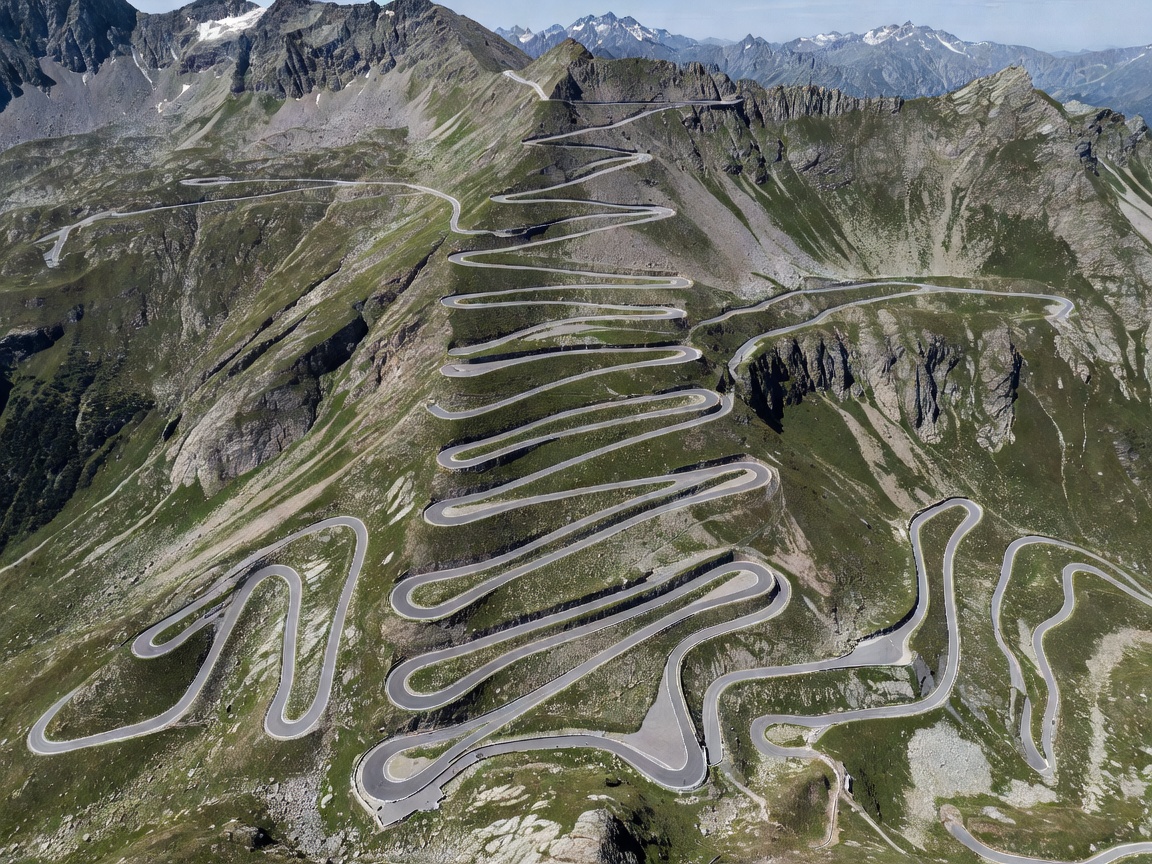
Geographic Overview and Scale
Situated in northern Italy, bordering Switzerland, the Stelvio Pass (Passo dello Stelvio) is the highest paved mountain pass in the Eastern Alps. It acts as a towering ribbon of asphalt that connects the Valtellina with the upper Adige valley and Merano. The sheer geographic scale of this pass is intimidating. Approaching from the classic northern side near Prato allo Stelvio, the ascent challenges travelers with 48 numbered hairpin turns (tornanti), climbing relentlessly up a wall of stone and alpine meadow.
The elevation gain is staggering, presenting a relentless test of stamina for cyclists and a severe thermal management challenge for motorized vehicles. Because of its extreme altitude, the pass is generally only accessible from early summer to late autumn. Snowfalls can occur abruptly, even in the middle of August, radically altering driving conditions and requiring immediate tactical shifts from drivers and riders alike.
The Engineering History
The original road was designed and constructed between 1820 and 1825 by the Austrian Empire to connect the former Austrian province of Lombardy with the rest of Austria. The chief engineer behind this colossal undertaking was Carlo Donegani. Incredibly, the route has changed very little since its inception, retaining its original dramatic grading and sweeping, stone-retained walls.
Before the widespread adoption of the automobile, the route was a grueling test for horse-drawn carriages and infantry. During the First World War, the pass became a bitter, high-altitude front line where Italian and Austro-Hungarian troops clashed amidst freezing conditions. Today, remnants of historical outposts and trenches can still be spotted by those who venture slightly off the main thoroughfare.
Driving Dynamics and Challenges
Tackling the Stelvio Pass requires a distinct driving or riding philosophy. The famous 48 turns on the northern face are tightly grouped, meaning drivers rarely have the opportunity to build sustained speed. Instead, the focus becomes technical precision: heavy, late braking, tight turn-ins, and aggressive low-speed acceleration.
These tight hairpins demand acute spatial awareness. It is not uncommon for modern, wide performance vehicles to struggle with turning circles on the innermost paths of the tighter tornanti. Oncoming traffic, ranging from motorcycles to large touring buses, frequently requires drivers to yield, stop, or reverse slightly to negotiate passage safely.
Furthermore, engine performance naturally decreases at an altitude approaching 2,800 meters due to reduced air density. Naturally aspirated engines may lose a noticeable percentage of their power output, whereas turbocharged setups compensate better but still experience increased thermal load on cooling systems. Managing brake fade during the descent into Bormio (which features an additional 39 hairpins) is crucial. Drivers must engage engine braking to avoid boiling brake fluid and entirely losing stopping power.
Preparation and Best Practices
Attempting the Stelvio is not a casual Sunday drive. Preparation is key to a safe and enjoyable ascent.
- Timing is Everything: The pass becomes extremely congested during peak daylight hours in the summer. To experience the fluid rhythm of the road without constant interruption, an ascent at dawn is highly recommended.
- Vehicle Health: Ensure tires have deep tread, brake pads are thick and firmly seated, and brake fluid has been recently changed. Cooling systems must be fully operational to handle the continuous low-speed, high-RPM strain.
- Mental Fatigue: The combination of high altitude, constant steering inputs, and concentration on oncoming traffic can induce rapid fatigue. Utilize the designated pull-outs to rest and take in the magnificent Ortizler Alps.
Stelvio remains the ultimate proving ground—a grueling, spectacular monument to human engineering amidst the uncompromising force of the Alps.