Transfăgărășan Highway
A sprawling, dramatic passage carved directly into the unforgiving Carpathian Mountains.
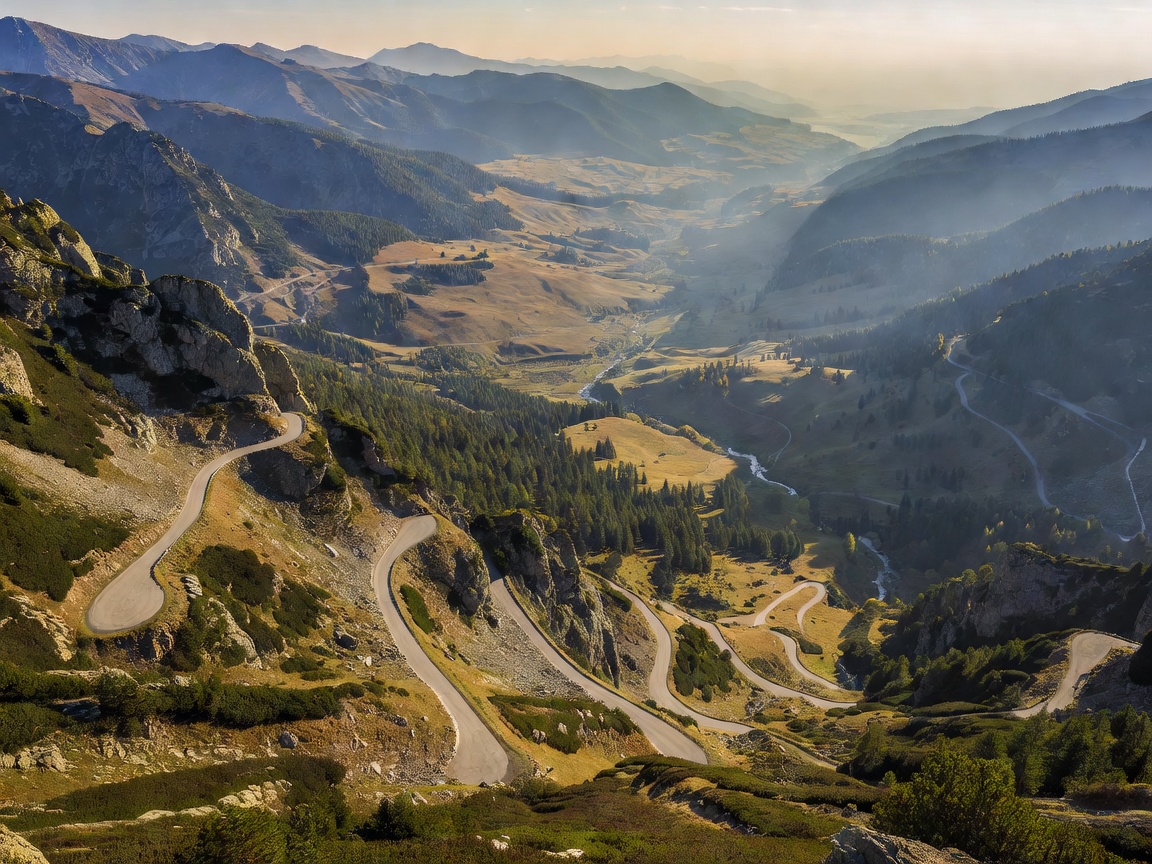
Geographic Overview and Scale
The Transfăgărășan (formally national road DN7C) is Romania's most celebrated road, stretching for over 90 kilometers as it carves its way through the Făgăraș Mountains, the highest peaks in the country. Connecting the historic regions of Transylvania and Wallachia, the route climbs to a maximum elevation of just over 2,000 meters near the glacial Balea Lake.
Unlike the tight, vertical zig-zags characteristic of some western Alpine passes, the Transfăgărășan offers sweeping valleys, long straights, S-curves, and dramatic changes in scenery. The northern approach drops sharply from the craggy peaks down into deep, verdant valleys dotted with sheep flocks, while the southern descent plunges through dark tunnels, past massive hydroelectric dams (such as Vidraru Dam), and heavy pine forests.
The Engineering History
The highway was constructed between 1970 and 1974 under the rule of Nicolae Ceaușescu. Conceived primarily as a strategic military route, it was designed to ensure rapid troop movements across the mountains in the event of a Soviet invasion following the 1968 invasion of Czechoslovakia. The construction came at a tremendous human and financial cost. Working in treacherous alpine environments with significant amounts of dynamite, numerous military personnel lost their lives carving the road out of the sheer rock.
The monumental effort resulted in a road that features five tunnels, numerous viaducts, and retaining walls that seem to cling desperately to the cliff sides. The longest tunnel, the Capra tunnel, cuts directly through the mountain peak for nearly 900 meters, remaining entirely unlit and offering a pitch-black transition from one side of the mountain range to the other.
Driving Dynamics and Challenges
Driving the Transfăgărășan is fundamentally different from tackling a pure hairpin-heavy route. The varied geometry of the road allows for higher average speeds in certain sections, which can lull a driver into a false sense of security before the road sharply tightens near the upper glacial valleys.
Road surface quality varies wildly. While some sections benefit from relatively recent resurfacing, other stretches suffer from severe frost heave, broken asphalt, and sudden potholes. Suspension compliance is key here; a vehicle set up too stiffly for a track will struggle to maintain composure and traction over the uneven Carpathian tarmac.
Weather is another critical variable. The road is typically only open from late June to late October. Heavy fog is incredibly common and can reduce visibility to absolute zero within moments. Drivers must exercise caution regarding rockfalls, which are a persistent hazard after heavy rains or rapid temperature changes.
Preparation and Best Practices
To fully appreciate the scope and grandeur of this epic road, thorough preparation is highly recommended.
- Fuel and Supplies: There are virtually no fuel stations directly on the high-altitude portions of the route. Drivers must ensure they begin the ascent with a full tank from either Curtea de Argeș in the south or Cârțișoara in the north.
- Tunnel Etiquette: The Capra tunnel at the summit is dark, damp, and often features standing water. Headlights are legally required, and extreme caution is necessary as pedestrians and cyclists frequently share the narrow tunnel space.
- Wildlife and Livestock: It is exceptionally common to encounter large flocks of sheep entirely blocking the road, accompanied by working sheepdogs. Furthermore, brown bear sightings along the forest sections have increased; visitors are urged not to stop and feed wildlife under any circumstances.
The Transfăgărășan offers a grand, theatrical driving experience. It feels wilder and more remote than its western European counterparts, providing an unforgettable journey through some of Eastern Europe's most imposing terrain.